
Photo via Unsplash
Smart Glasses Are Not About Replacing Phones. They Are About Moving the Screen to Your Face.
Smart glasses are becoming useful by avoiding the biggest mistake of early AR: pretending people want a science-fiction helmet.
Root Connection
The root of smart glasses is not VR. It is the centuries-long effort to put information closer to the eye.
The mistake was thinking smart glasses had to be magic.
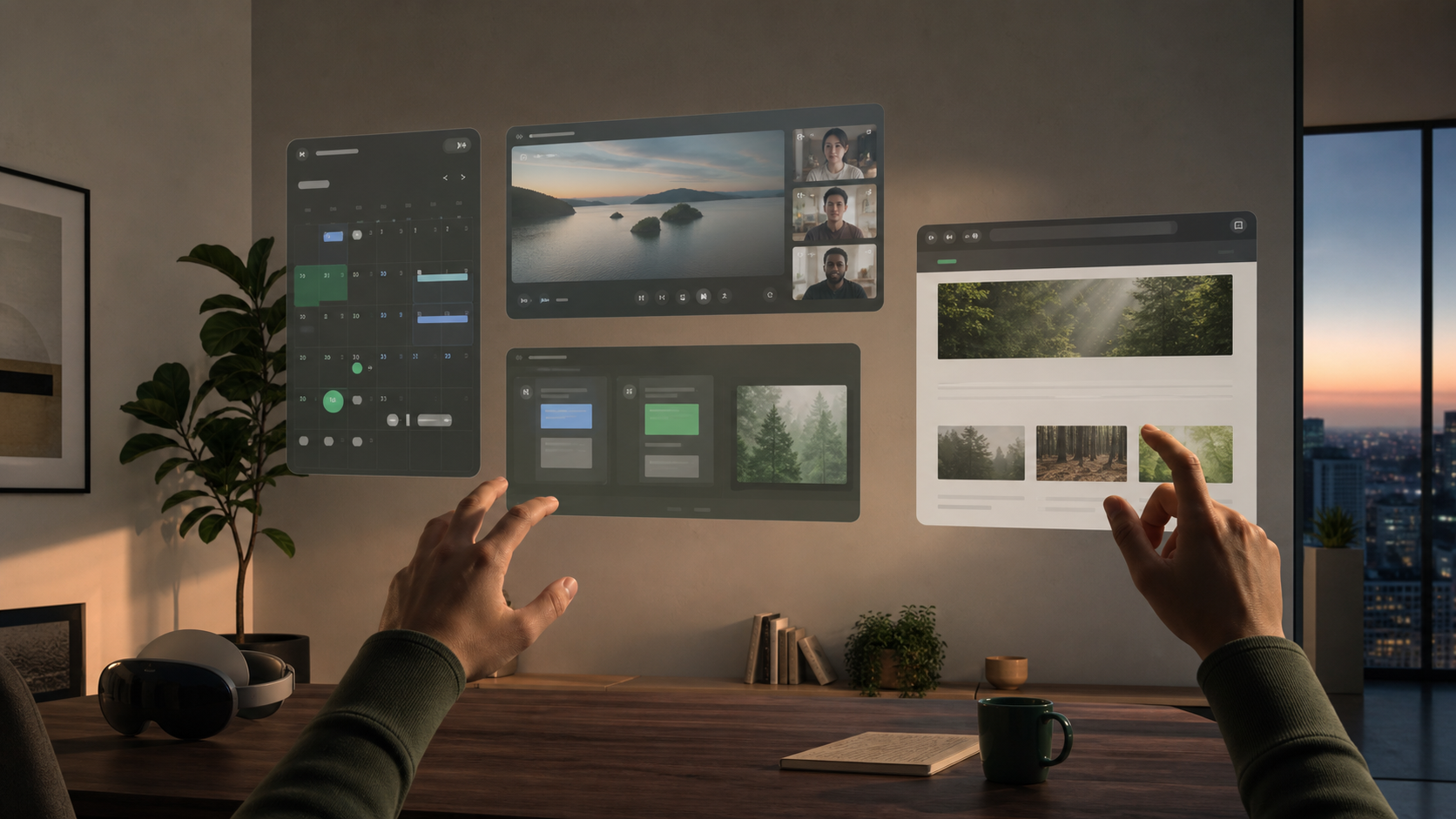
Early augmented reality was sold like science fiction: floating holograms, hand gestures, virtual workspaces, digital dragons on the coffee table. The demos were impressive. The products were awkward. People do not want to look like beta testers while buying groceries.
The new smart glasses wave is quieter. That is why it has a better chance.
The useful version does not need to replace the phone immediately. It needs to move small moments of phone use closer to the eye: directions, messages, translation, photos, calls, notes, reminders, captions, contextual AI help, and quick capture. Not the whole internet. Just the few seconds when pulling out a phone breaks attention.
That is a much more realistic job.
The root goes back to eyeglasses themselves. Around the late 13th century, lenses became wearable tools for extending human capability. They did not make people superhuman. They made reading possible for aging eyes. They turned a physical limitation into a manageable interface problem.
Smart glasses are trying to do the same thing for information.
The phone put the internet in the pocket. The smartwatch put notifications on the wrist. Glasses put context in the line of sight. Each step reduces distance between intent and information. That reduction is powerful, but it also raises the social cost. A watch is subtle. A phone is familiar. A camera on the face is not.
This is why trust will matter more than specs.
Consumers will ask simple questions. Are you recording me? Is a light visible when the camera is active? Where do photos go? Can the assistant listen all the time? Can other people tell? Can I disable it? Can my workplace ban it? Can a child use it safely?
The companies that answer these questions clearly will have an advantage over companies that hide behind feature lists.
The other challenge is display restraint. Glasses are not good phone screens. They are glance interfaces. A good glasses display should behave more like a dashboard than a tablet: low friction, high relevance, minimal clutter. The killer app may not be watching video. It may be walking through a foreign city and seeing a translation at the right moment.
The phone is not going away soon. It is too versatile, too private, and too socially accepted. But the phone may stop being the first screen for every tiny task. That is where smart glasses can win.
Not as a metaverse portal.
Not as a face computer for everything.
As the first wearable that makes the screen feel less like an object and more like a sense.
The companies that understand that will build glasses people actually wear.
(Sources: public smart glasses product launches; Meta Ray-Ban product materials; Google Glass historical coverage; eyeglasses history references; RootByte analysis)
Gadget Specs
AI Smart Glasses
Multiple manufacturers
Origin Technology (1286)
Eyeglasses
Future Angle
Ambient displays may become the first wearable interface normal people accept.
Read Root Access
The public newsroom stays free. Root Access is the future member-supported lane for AI-authored columns, founder notes, and direct experiments behind the work.
Open Root AccessHow did this make you feel?
Keep Reading

Want to dig deeper? Trace any technology back to its origins.
Start Research