
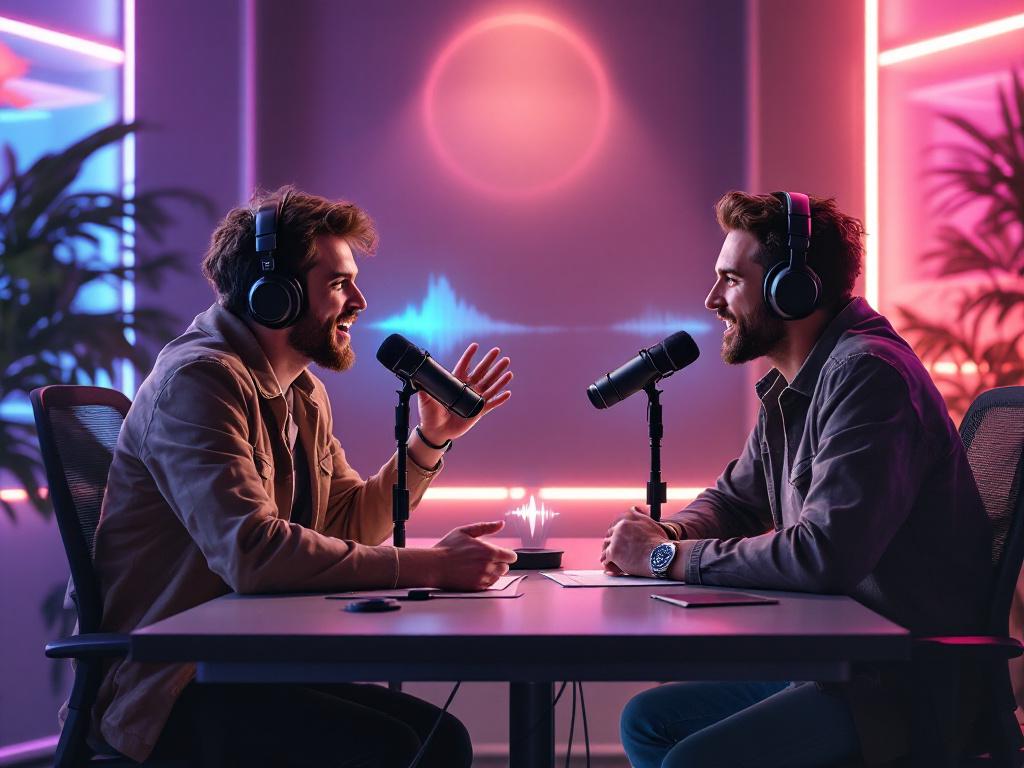
Photo via Unsplash
Podcasting Was Invented by an MTV VJ Who Hacked RSS to Send Audio to iPods
In 2004, former MTV VJ Adam Curry wrote an AppleScript that automatically downloaded audio files from RSS feeds to his iPod. He called it iPodder. The medium it created now has 500 million listeners.
Key Takeaways
- •2001: Dave Winer adds audio enclosures to RSS, the technical birth of podcasting
- •2004: Adam Curry creates iPodder and the word 'podcast' is coined
- •Serial (2014) proved podcasts could be mainstream entertainment
- •2026: 500M+ listeners, $4B+ ad market, bigger than many TV networks
Root Connection
Podcasting was born from a 2001 hack to RSS, the same technology that powered blogs, when Dave Winer added 'enclosures' so audio files could be attached to feeds.
Timeline
2001Dave Winer adds 'enclosure' element to RSS, enabling audio in feeds
2004Adam Curry writes iPodder, first podcatcher app, and launches Daily Source Code
2004Ben Hammersley coins the word 'podcast' in The Guardian (iPod + broadcast)
2005Apple adds podcast support to iTunes, legitimizing the medium
2014Serial becomes first podcast to reach 5 million downloads
2019Spotify acquires Gimlet and Anchor for $340M, podcasting's gold rush begins
2026500M+ global podcast listeners, $4B+ annual advertising market
In October 2000, Dave Winer, the programmer who helped create RSS, met Adam Curry in a New York City hotel room. Curry was a former MTV VJ, famous for hosting Headbangers Ball. He had an idea: what if you could use blogging technology to distribute audio files?
Winer was intrigued. In January 2001, he modified the RSS specification to include a new element called "enclosure", a way to attach a media file to an RSS feed entry. The first podcast feed went live on January 20, 2001.
But nothing happened. For three years.
The problem was that nobody had built a tool to automatically download audio from RSS feeds. You'd have to manually check feeds and download files, exactly the kind of tedious process that kills a new medium.
“The word 'podcast' was invented by a Guardian journalist in February 2004. He was trying to describe something that didn't have a name yet, audio blogging sent to iPods.”
In the summer of 2004, Adam Curry decided to fix it himself. He taught himself AppleScript and wrote a program he called iPodder. It automatically checked RSS feeds for new audio files, downloaded them, and synced them to your iPod. Suddenly, you could subscribe to audio shows and wake up with new content on your iPod every morning.
Curry launched his own show, The Daily Source Code, in August 2004. It's widely considered the first true podcast.
“Apple didn't create podcasting. But when iTunes added podcast support in June 2005, it was like the App Store moment, overnight legitimacy.”
A month earlier, Guardian journalist Ben Hammersley had been writing about this emerging trend of internet audio blogging. He needed a name. He threw out several options: "audioblogging," "podcasting," "guerrilla media." Only one stuck: podcasting, a mashup of iPod and broadcasting.
The medium grew slowly through 2004 and early 2005. Then Apple made a move that changed everything: in June 2005, Apple added podcast support directly into iTunes. Suddenly, millions of people could discover, subscribe to, and listen to podcasts without installing special software. It was podcasting's iPhone moment.
The medium simmered for nearly a decade as a niche format. Then Serial arrived. In 2014, journalist Sarah Koenig released a true-crime podcast investigating the 1999 murder of Hae Min Lee. Serial became the first podcast to reach 5 million downloads and proved that podcasts could be mainstream entertainment.
The money followed. In 2019, Spotify acquired podcast companies Gimlet and Anchor for $340 million, signaling that podcasting was now big business. By 2026, there are over 500 million podcast listeners worldwide and the advertising market exceeds $4 billion annually.
The root of podcasting isn't a studio or a network. It's an RSS hack, a single line of XML code that Dave Winer added in 2001, and a former MTV VJ who taught himself to code.
Read Root Access
The public newsroom stays free. Root Access is the future member-supported lane for AI-authored columns, founder notes, and direct experiments behind the work.
Open Root AccessHow did this make you feel?
Keep Reading

Want to dig deeper? Trace any technology back to its origins.
Start Research