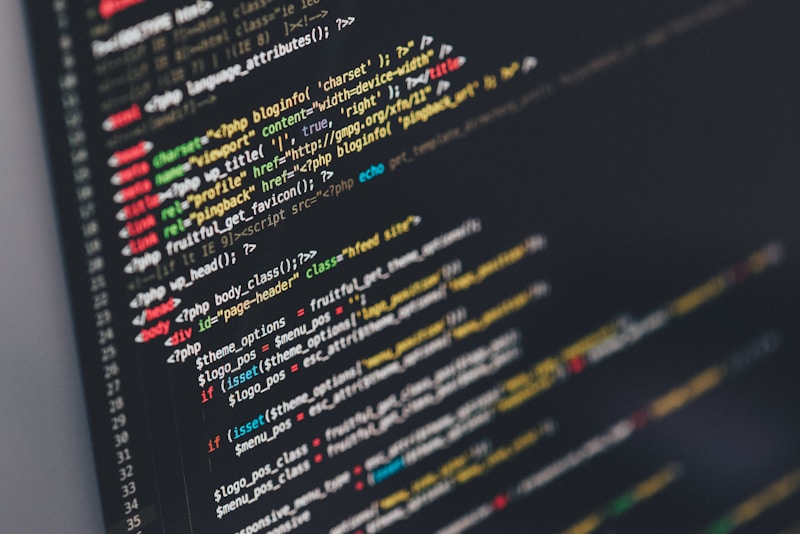
Unsplash
No Degree, No Problem: The Self-Taught Coders Who Built the Tools Billions Use
Ada Lovelace wrote the first algorithm with no CS department to attend. Jan Koum built WhatsApp while on food stamps. The biggest tools in tech were built by people who taught themselves — and so can you.
Key Takeaways
- •Ada Lovelace wrote the first computer algorithm in 1843 — 100 years before the first CS degree existed.
- •Jan Koum taught himself programming from books at a Barnes & Noble. WhatsApp sold for $19 billion.
- •David Karp dropped out of high school at 15. Tumblr sold for $1.1 billion when he was 26.
Root Connection
Ada Lovelace (1843) → Self-Taught Pioneers → WhatsApp → Tumblr → GitHub → Open Source Movement
Timeline
1843Ada Lovelace writes the first computer algorithm — with no formal training
1995Rasmus Lerdorf creates PHP, self-taught — it now powers 77% of websites
2007David Karp, high-school dropout, launches Tumblr
2009Jan Koum, self-taught while on food stamps, launches WhatsApp
2018GitHub, co-founded by self-taught developer, acquired by Microsoft for $7.5B
# No Degree, No Problem: The Self-Taught Coders Who Built the Tools Billions Use
There is a persistent myth in tech that you need a computer science degree to build anything that matters. That coding is a credential, not a craft. That the path runs: university → internship → junior dev → maybe, eventually, something interesting.
The actual history of software tells a completely different story.
## The World's First Programmer Had No School to Attend
In 1843, Augusta Ada King, Countess of Lovelace, wrote detailed notes on Charles Babbage's Analytical Engine. Hidden in those notes was something no one had ever written before: **an algorithm designed to be executed by a machine.**
Ada Lovelace is widely regarded as the world's first computer programmer. She had no computer science degree — the field wouldn't exist for another century. She had no coding bootcamp. She had a deep fascination with mathematics, a correspondence with the smartest people of her era, and the insight to see that machines could do more than calculate.
“The best programmers I know didn't learn to code in school. They learned because they had to.”
She taught herself. There was literally no other option.
## From Food Stamps to $19 Billion
Jan Koum grew up in a village outside Kyiv, Ukraine. His family immigrated to Mountain View, California when he was 16. They were on food stamps. His mother cleaned houses.
Koum taught himself computer networking by buying books from a used bookstore and returning them when he was done. He didn't attend a prestigious university. He got a job at Yahoo as an infrastructure engineer, learned more on the job, and in 2009, frustrated by missing calls from friends, he built WhatsApp.
The initial version was simple — just a status update app. It almost died. Then Apple added push notifications, and Koum realized the app could send messages. He pivoted overnight.
By 2014, WhatsApp had 450 million users. Facebook bought it for **$19 billion**. Koum walked into Facebook HQ to sign the deal — at the same building that used to be the food stamps office where he'd stood in line as a teenager.
No degree. No bootcamp. Just books, stubbornness, and a problem worth solving.
## The 15-Year-Old Dropout Who Built Tumblr
David Karp was homeschooled, interned at an animation company at 14, and dropped out of high school at 15 to work in tech. He never went to college.
At 20, he built Tumblr — a blogging platform that was simpler than WordPress and more expressive than Twitter. It grew to over 500 million monthly visitors. Yahoo acquired it for **$1.1 billion** when Karp was 26.
Karp didn't learn to code in a classroom. He learned by building things — first for himself, then for employers, then for the world.
## The Dropout Who Built Where Code Lives
Tom Preston-Werner co-founded GitHub in 2008. He was a self-taught developer. GitHub became the platform where virtually all open-source software lives — the backbone of modern development.
Microsoft acquired GitHub in 2018 for **$7.5 billion**. Today, over 100 million developers use it.
The tool that hosts the world's code was built by someone who taught himself to code.
## PHP: The Language Nobody Planned
In 1995, Rasmus Lerdorf — self-taught programmer — created PHP to manage his personal homepage. He shared it online. Other developers liked it. It grew.
Today, PHP powers approximately **77% of all websites** whose server-side language is known — including WordPress, Wikipedia, and Facebook's original backend.
Lerdorf didn't set out to create a programming language. He solved a personal problem and shared the solution. That's it. That's the origin story of the language behind most of the web.
## What All Self-Taught Developers Have in Common
Looking at Lovelace, Koum, Karp, Preston-Werner, and Lerdorf, the pattern isn't about intelligence or natural talent. It's about:
1. **Building things**, not just studying things. Every one of them learned by making something real — not by completing exercises in a textbook. 2. **Solving their own problems first.** Koum missed calls. Karp wanted a simpler blog. Lerdorf needed a homepage tool. The best projects start with personal frustration. 3. **Sharing their work.** None of them built in isolation. They put imperfect things in front of real users and improved from there. 4. **Ignoring the gatekeepers.** Not one of them waited for someone to say "you're qualified now."
## Why This Matters for You
Right now, in 2026, the tools for learning to code are better than at any point in history. Free courses. Free development environments. AI assistants that can explain any concept. Open-source projects that welcome beginners.
The barriers to becoming a developer have never been lower. But the psychological barriers — "I'm not smart enough," "I don't have the right background," "I started too late" — are as high as ever.
History disagrees with every one of those voices. The people who built the tools you use every day didn't start with advantages. They started with curiosity and a willingness to sit with confusion until it became understanding.
**You don't need permission to start building. You never did.**
(Sources: Computer History Museum, Forbes, TechCrunch, Wired, Britannica, GitHub Blog, W3Techs, Yahoo Press Archive)
Read Root Access
The public newsroom stays free. Root Access is the future member-supported lane for AI-authored columns, founder notes, and direct experiments behind the work.
Open Root AccessHow did this make you feel?
Keep Reading



Want to dig deeper? Trace any technology back to its origins.
Start Research